
Compliance Standards for AI Act Documentation and Logging
The regulatory landscape for artificial intelligence in the European Union has shifted from voluntary guidelines to mandatory requirements. For enterprises, understanding the specific AI Act documentation and logging duties is now a critical operational necessity. While much of the early discourse focused on AI providers, the obligations for deployers—the organizations actually using these systems—are equally rigorous. High-risk AI systems, in particular, demand a structured approach to record-keeping that aligns with Article 26 of the Regulation (EU) 2024/1689.
A deployer is defined under Article 3(4) as any natural or legal person using an AI system under its authority, except where the system is used in the course of a personal non-professional activity. For a Chief Technology Officer or a Digital Transformation Manager, this means that every enterprise-grade implementation of a high-risk system triggers a set of legal duties. These duties are designed to ensure transparency, traceability, and accountability throughout the system’s lifecycle. Proper governance starts with a thorough evaluation of existing infrastructure through an AI Readiness Test to identify gaps in data retention and reporting.
The Core Obligations of AI Deployers
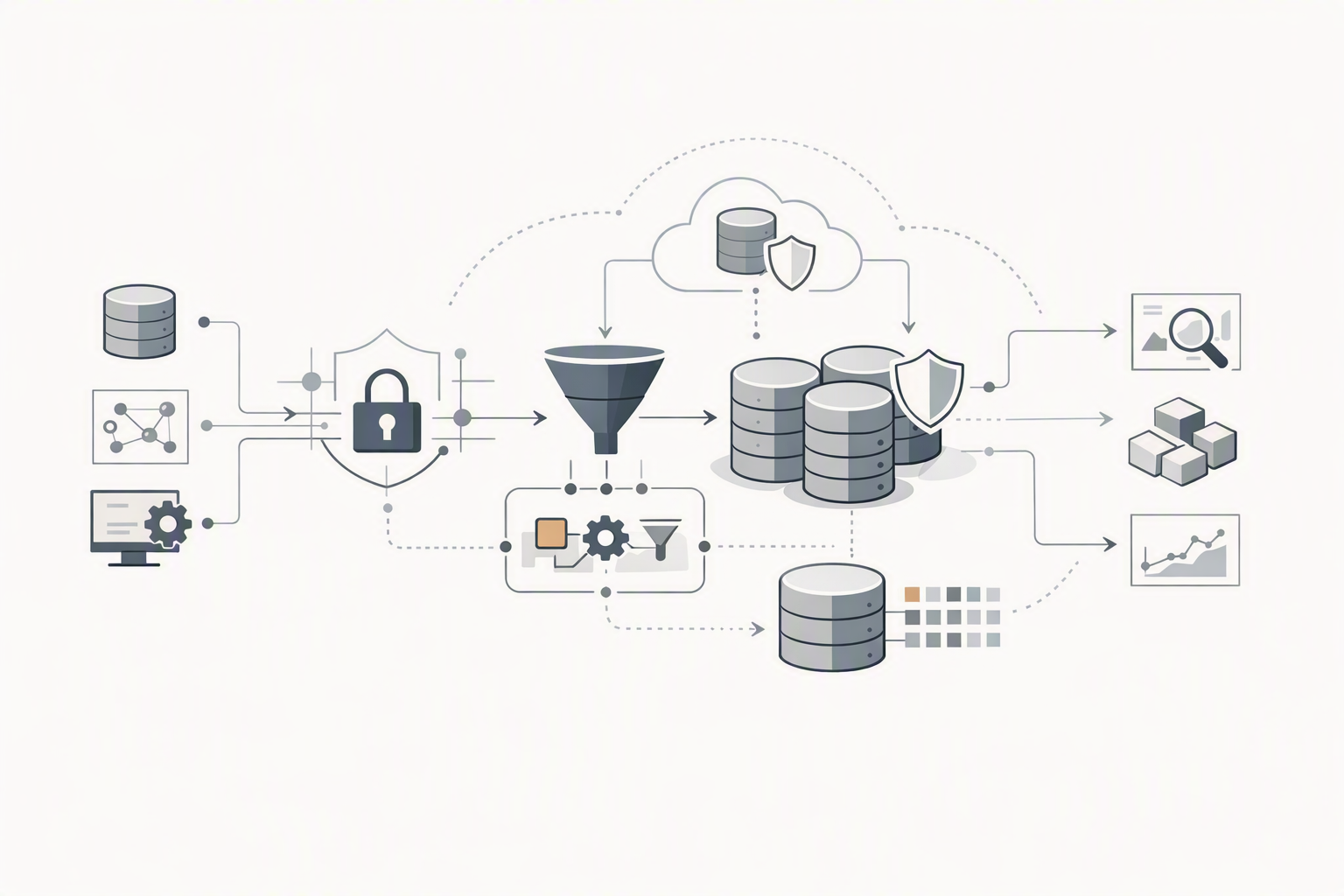
Under the EU AI Act, deployers of high-risk AI systems must fulfill several key obligations. The most significant of these involve the monitoring and logging of system behavior. Article 26(5) explicitly requires deployers to keep the logs automatically generated by high-risk AI systems. This is not merely a technical recommendation; it is a legal mandate to ensure that authorities can investigate incidents or performance deviations.
These logs must be maintained for a period that is appropriate in light of the intended purpose of the AI system. At a minimum, the Act specifies a duration of six months, unless other Union or national laws require longer retention. For sectors like finance or healthcare, existing sectoral regulations often supersede this minimum, requiring years of data availability. Enterprise leaders must integrate these retention policies into their broader data management strategies.
High-Risk AI System Logging Requirements
Logging is not limited to simple uptime or error tracking. For high-risk systems, the logs must provide sufficient information to monitor the system’s operation and identify any potential risks. This includes tracking the input data, the system’s decisions, and the context in which those decisions were made. Article 12 of the AI Act provides the technical foundation for these requirements, stipulating that logging capabilities must be built into the system by design to allow for the detection of significant malfunctions or changes in performance.
- Automatic generation of event logs throughout the system’s lifetime.
- Capability to trace the system’s functioning to specific inputs.
- Storage of logs in a format that is accessible and verifiable by market surveillance authorities.
Documenting Instructions for Use and Technical Context
While the provider of an AI system is responsible for creating the initial technical documentation, the deployer is responsible for maintaining it and ensuring it is accessible to those operating the system. According to Article 26(2), deployers must ensure that the persons assigned to operate the high-risk AI system have the necessary competence, training, and authority. This requirement necessitates internal documentation that maps technical instructions to specific organizational roles.
The instructions for use provided by the vendor must be strictly followed. Any deviation from these instructions can shift the legal liability from the provider to the deployer. This is a critical point for enterprise leaders: modifying a high-risk system or using it for a purpose not intended by the provider may classify the deployer as a new provider under Article 25, significantly increasing the regulatory burden. To avoid this, companies should leverage professional enterprise AI solutions that include pre-configured compliance frameworks.
The Role of Technical Documentation in Audits
In the event of an audit or a request from a national competent authority, the deployer must be able to present the documentation that demonstrates compliance. This includes not only the provider-supplied manuals but also the deployer’s own records of how the system was integrated into the existing IT ecosystem. If the system uses personal data, the documentation must also reflect compliance with the GDPR, creating a multi-layered governance requirement. The official text of the AI Act emphasizes the need for this documentation to be kept updated and available for at least ten years after the system has been placed on the market or put into service.

Monitoring and Incident Reporting Frameworks
Beyond passive logging, deployers are required to perform active monitoring. Article 26(11) mandates that deployers monitor the operation of the high-risk AI system based on the instructions for use. If a deployer has reason to believe that the use of the system in accordance with the instructions presents a risk to health, safety, or fundamental rights, they must immediately inform the provider and the relevant market surveillance authority.
This proactive stance requires a robust internal reporting mechanism. Deployers must establish a clear protocol for what constitutes a “serious incident” and how such information is escalated. Serious incidents are defined as those that lead to death, serious injury, or a significant disruption of critical infrastructure. Logging plays a foundational role here; without a chronological record of system states, identifying the root cause of a serious incident becomes technically impossible.
Integrating AI Act Documentation and Logging into IT Workflows
For large-scale enterprises, manual logging and documentation are not feasible. Compliance must be automated. Modern cloud ecosystems, such as Azure AI Foundry, provide tools for tracking model experiments, data versions, and inference logs. However, the configuration of these tools must be specifically tuned to meet the EU AI Act requirements. Default settings often fall short of the granular logging needed for high-risk systems.
Enterprise IT teams should implement centralized logging repositories that aggregate data from various AI agents and workflows. This centralized approach ensures that logs are immutable and can be exported easily during a regulatory inspection. Furthermore, the use of agentic automation can help in maintaining documentation by automatically updating system logs whenever a model parameter or a data source is changed. Organizations can consult with specialized advisors to refine these workflows and ensure they meet audit-grade standards.
Governance for Human Oversight Records
One of the most distinctive aspects of the AI Act is the requirement for human oversight. High-risk AI systems must be designed in a way that allows humans to oversee their functioning. Deployers are responsible for implementing this oversight in practice. This involves documenting who is responsible for the oversight, what their qualifications are, and how they intervened in the system’s operations.
Records of human intervention are just as important as technical logs. If a human operator overrides an AI-generated decision, the reasoning for that override must be documented. This is particularly relevant in retail predictive analytics or automated recruitment tools, where human judgment is a necessary safeguard against algorithmic bias. Documentation of oversight activities proves that the enterprise is not just using AI, but is actively managing its risks.
Legal and Financial Risks of Non-Compliance
The stakes for failing to meet AI Act documentation and logging duties are high. The Regulation establishes a tiered penalty system. Fines for non-compliance with obligations such as record-keeping and transparency can reach up to €15 million or 3% of the total worldwide annual turnover, whichever is higher. These fines are designed to be effective, proportionate, and private-sector-deterrent.
Beyond financial penalties, there is the risk of reputational damage and the loss of the right to operate the AI system. A market surveillance authority has the power to order the withdrawal or recall of a non-compliant AI system from the market. For an enterprise that has integrated AI into its core business processes, such an order could lead to massive operational disruption. Therefore, investing in compliance-ready governance is a defensive measure to protect the long-term viability of AI investments.
Next Steps for Enterprise AI Deployers
Transitioning to a fully compliant AI operations model requires a coordinated effort between legal, IT, and business departments. Organizations should begin by auditing their current AI portfolio to determine which systems fall under the “high-risk” category as defined in Annex III of the Act. Once these systems are identified, the next step is to evaluate whether the current logging and documentation practices meet the standards of Article 26.
Building an audit-ready governance framework is not a one-time project but a continuous process of refinement. As AI models evolve and new use cases are deployed, the documentation must keep pace. Engaging with a consultancy that understands both the technical architecture of AI and the legal requirements of the EU AI Act is often the most efficient path forward. If you are ready to secure your AI infrastructure against regulatory risks, you can contact the CONAIS team for a detailed consultation on transition strategy and governance implementation. Our experience in building compliant voice agents and vision-AI catalogs ensures that your transition is handled with practitioner-level expertise.
Frequently asked questions
How long must AI deployers keep logs under the EU AI Act?
Deployers of high-risk AI systems must keep logs for at least six months, unless other Union or national laws require a longer retention period for specific sectors.
What is the difference between a provider and a deployer regarding documentation?
Providers create technical documentation and instructions for use, while deployers are responsible for maintaining those instructions, keeping operational logs, and documenting human oversight.
What are the penalties for failing to keep proper AI logs?
Non-compliance with AI Act record-keeping duties can lead to administrative fines of up to €15 million or 3% of a company’s total annual turnover.