

Introduction to GPAI Obligations Under the EU AI Act
The European Union AI Act introduces a tiered regulatory framework that places specific requirements on the developers and deployers of AI technologies. A central pillar of this regulation concerns General-Purpose AI (GPAI) models. Understanding the GPAI obligations EU AI Act imposes is critical for enterprises integrating large-scale models into their cloud ecosystems. For Chief Technology Officers and data leaders, these rules define the boundary between innovative flexibility and legal liability.
A GPAI model is defined in Article 3(63) as an AI model that displays significant generality and is capable of competently performing a wide range of distinct tasks. This is distinct from a GPAI system, defined in Article 3(66), which is an AI system based on a GPAI model that has the capability to serve a variety of purposes. The distinction is vital because the obligations vary depending on whether an organization is providing the underlying model or deploying a system based on that model.
As enterprises transition toward AI-native architectures, they must evaluate their tech stack against these requirements. Organizations can begin this process by taking an AI Readiness Test to identify where their current governance structures may fall short of the new European standards. This proactive approach ensures that the adoption of Azure OpenAI or other agentic frameworks remains compliant and audit-ready.
Defining the Scope: Who is a GPAI Provider?
The Act primarily targets ‘providers’ of GPAI models. According to the Official EU AI Act text (Regulation 2024/1689), a provider is any natural or legal person that develops an AI model and places it on the market or puts it into service under its own name or trademark. This includes both proprietary developers and those who release models under free and open-source licenses, though the latter may benefit from certain exemptions unless the model presents a systemic risk.
For enterprise retailers and large-scale IT departments, the role of ‘deployer’ is more common. However, if an enterprise heavily modifies a GPAI model or integrates it in a way that fundamentally changes its purpose, they risk being reclassified as a provider under Article 28. This shift in status triggers the full weight of the GPAI obligations EU AI Act mandates, making internal governance a top priority for IT leadership.

Compliance Requirements for All GPAI Model Providers
Article 53 of the AI Act outlines the baseline obligations for all providers of GPAI models. These requirements are designed to ensure transparency across the AI supply chain. Even if a model is not deemed to have systemic risk, the provider must maintain rigorous documentation and clear communication with downstream users who integrate these models into their own applications.
- Technical Documentation: Providers must create and maintain technical documentation as specified in Annex VIII. This includes details on the training process, energy consumption, and testing results.
- Information for Downstream Providers: Under Annex IX, providers must supply information that enables downstream integrators (such as those building specialized AI Solutions) to understand the model’s capabilities and limitations.
- Copyright Policy: Providers must implement a policy to respect Union copyright law, particularly regarding the use of data for training purposes.
- Training Data Summaries: A publicly available summary of the content used for training the GPAI model must be published, facilitating transparency for rights holders and regulators.
Technical Documentation and Transparency Standards
The documentation requirements are not merely administrative. They serve as the technical foundation for audit-grade governance. Annex VIII requires a detailed description of the model design, the logic of the algorithms, and the hardware resources used for training. For enterprises building vision-AI catalogs or voice agents, this level of detail is necessary to ensure that the integrated components do not introduce unmanaged risks into the legacy IT environment.
Transparency also extends to the model’s performance. Providers are expected to disclose the results of internal and external testing, including evaluations against benchmarks. This data allows CTOs to make informed decisions when selecting vendor-agnostic components for their AI-native transition strategy, ensuring that the chosen tools meet the high standards of the EU regulatory environment.
GPAI Models with Systemic Risk (Article 51)
The EU AI Act introduces a specialized category for GPAI models that pose ‘systemic risk.’ These are models that possess high-impact capabilities or are widely utilized across the Union, potentially leading to significant negative effects on health, safety, or fundamental rights. Article 51 establishes the criteria for this classification, which includes both quantitative and qualitative measures.
The primary quantitative threshold is based on the total computing power used for training, measured in floating-point operations (FLOPs). A model is presumed to have systemic risk if the cumulative amount of computation used for its training is greater than 10^25 FLOPs. This threshold targets the most powerful foundational models currently on the market, such as the largest iterations of GPT or Gemini.
Enhanced Obligations for Systemic Risk Models
When a model is classified as having systemic risk, Article 55 mandates additional GPAI obligations EU AI Act compliance steps. These go beyond the standard transparency requirements and focus on active risk management and mitigation. The European AI Office, established within the Commission, oversees the enforcement of these high-level rules.
- Model Evaluation: Providers must perform model evaluations, including conducting and documenting adversarial testing (red-teaming) to identify potential vulnerabilities.
- Risk Assessment and Mitigation: Providers are required to assess and mitigate systemic risks, including those related to cybersecurity, public discourse, or large-scale accidents.
- Incident Reporting: Any serious incidents involving the model must be reported to the AI Office and relevant national competent authorities without undue delay.
- Cybersecurity Protection: An adequate level of cybersecurity protection for the model and its physical infrastructure must be ensured.
For large-scale enterprises, these systemic risk obligations provide a layer of protection. When integrating these models through platforms like Azure AI Foundry, the underlying provider (e.g., Microsoft or OpenAI) carries the primary burden of Article 55. However, the enterprise must still ensure its implementation remains within the documented safety boundaries provided by the model developer.
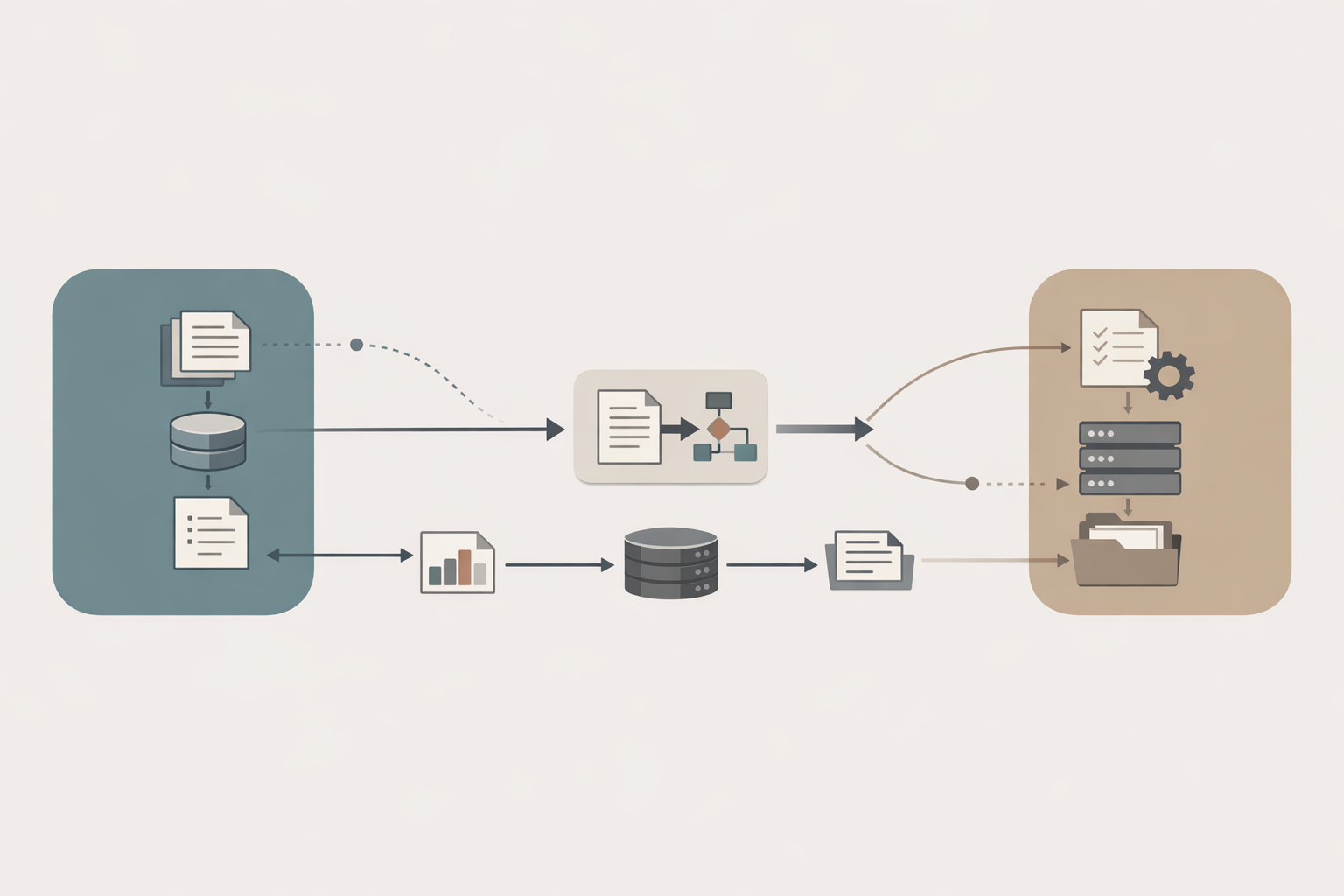
Downstream Impact: Enterprise Deployers and Integrators
While the focus of the GPAI obligations EU AI Act is on providers, the ripple effects for enterprise deployers are significant. Most CONAIS clients operate as deployers, using GPAI models to power automated decision-making workflows or predictive analytics for retail. In these scenarios, the quality of the provider’s compliance directly impacts the enterprise’s ability to remain compliant as a user of ‘high-risk’ systems.
If a GPAI model is used as a component of a high-risk AI system (such as in recruitment or critical infrastructure), the deployer must ensure that the model’s documentation allows for full compliance with the system-level requirements of the Act. This includes human oversight, accuracy, and robustness. A lack of transparency from the model provider can create a ‘compliance gap’ that prevents the enterprise from deploying the solution legally within the EU.
The Role of Governance in AI-Native Transitions
Transitioning to an AI-native architecture requires more than just technical integration; it requires a shift in governance. Organizations must align their legacy IT frameworks with the requirements of the AI Act. This involves establishing clear lines of responsibility for model monitoring and data provenance. By utilizing Our Services, enterprises can bridge the gap between technical capability and regulatory necessity.
Effective governance also involves vendor-agnostic evaluation. Enterprises should not be locked into a single model provider if that provider cannot meet the transparency requirements of Annex IX. Maintaining flexibility in the AI stack allows organizations to swap models if compliance risks become too high, ensuring long-term operational resilience in the face of evolving EU standards.
Implementing Audit-Grade Governance for GPAI
To meet the GPAI obligations EU AI Act standards, enterprises must implement audit-grade governance. This is not a one-time project but an ongoing process of monitoring and documentation. It begins with a thorough inventory of all AI models and systems currently in use or under development. Each model must be categorized based on its risk level and its role in the business process.
For models integrated via cloud providers, enterprises should demand ‘Transparency Reports’ that mirror the requirements of Article 53. These reports should be integrated into the organization’s broader risk management framework. For internal developments, such as custom vision-AI or voice agents, the documentation must be produced internally to ensure it meets the standards required for potential regulatory audits.
The Importance of Professional Advisory
The complexity of the EU AI Act makes professional advisory indispensable for large-scale organizations. Navigating the nuances of Article 51 and the specific documentation requirements of Annex VIII requires a blend of legal knowledge and technical expertise. CONAIS provides this specialized support, helping enterprises build AI systems that are compliant by design.
The goal is to move beyond mere compliance and use these regulations as a framework for building more robust, reliable, and ethical AI. When an organization can demonstrate a clear understanding of its GPAI obligations, it builds trust with customers, regulators, and stakeholders. This trust is a competitive advantage in a market increasingly defined by the responsible use of technology.
Conclusion
The GPAI obligations under the EU AI Act represent a significant shift in how large-scale AI models are regulated. By establishing clear tiers of responsibility and demanding high levels of transparency, the Act aims to foster an environment where AI can be adopted safely and ethically. For CTOs and digital transformation leaders, the task is to integrate these requirements into their strategic roadmaps today.
Compliance should not be viewed as a hurdle, but as a blueprint for professional AI adoption. Whether you are building agentic automation or modernizing legacy IT with predictive analytics, the governance structures you put in place now will determine your success in the European market. If your organization is navigating these complexities, Contact the team at CONAIS to discuss how we can support your AI-native transition with expert guidance and audit-grade implementation.
Frequently asked questions
What is the difference between a GPAI model and a GPAI system?
A GPAI model is the underlying foundational technology capable of many tasks, while a GPAI system is an application built using that model for specific purposes.
What is the threshold for systemic risk in GPAI models?
A model is presumed to have systemic risk if the cumulative computing power used for its training exceeds 10^25 floating-point operations (FLOPs).
Do open-source AI models have to comply with GPAI obligations?
Generally, open-source models are exempt from certain transparency obligations unless they are deemed to pose a systemic risk or are integrated into high-risk systems.
What documentation is required under Annex VIII?
Annex VIII requires detailed technical documentation including model design, training processes, energy consumption, and evaluation results for regulatory review.