

Navigating the EU AI Act Deadlines 2026
The European Union Artificial Intelligence Act (Regulation (EU) 2024/1689) officially entered into force on August 1, 2024. While the initial wave of prohibitions regarding unacceptable risk systems takes effect in early 2025, the year 2026 stands as the most critical period for enterprise technology leaders. Understanding the specific EU AI Act deadlines 2026 is essential for Chief Technology Officers and Digital Transformation Managers who are currently integrating agentic workflows and large language models into their legacy infrastructure.
For large-scale enterprises and e-commerce retailers, 2026 represents the end of the primary transition period. By August 2, 2026, the majority of the Act’s provisions become applicable. This includes the stringent requirements for high-risk AI systems and the final compliance transition for General Purpose AI (GPAI) models that were already on the market before the Act’s inception. Organizations must move beyond pilot projects and establish audit-grade governance structures now to avoid significant financial penalties and operational disruptions.
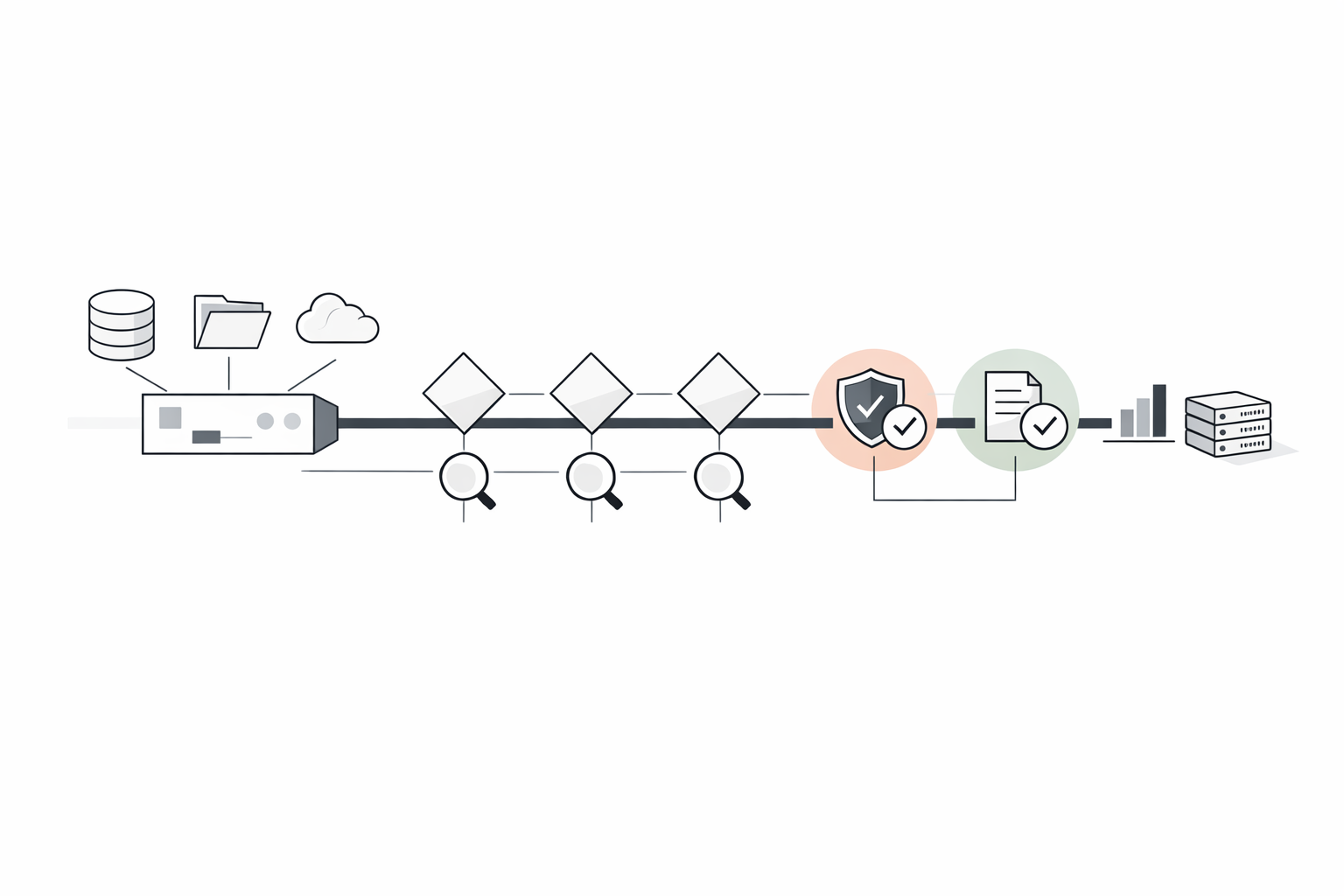
The August 2026 Milestone for High-Risk Systems
The most significant date in the implementation timeline is August 2, 2026. Under Article 113, this is the date when the general rules for AI systems, particularly those classified as high-risk under Annex III, become legally binding. High-risk systems include those used in critical infrastructure, recruitment, credit scoring, and essential private services. If your enterprise utilizes predictive analytics for retail credit or automated decision-making in HR, your systems must meet comprehensive compliance standards by this date.
Article 6 of the Act defines the classification criteria for high-risk systems. Organizations must perform a detailed inventory of their AI portfolio to determine which applications fall under this category. This inventory should not only include custom-built models but also third-party integrations and agentic automations embedded within cloud ecosystems like Azure AI Foundry. To determine your current standing, it is advisable to conduct an AI Readiness Test to identify gaps in your existing data architecture and governance policies.
Data Governance and Quality Standards
Article 10 of the AI Act mandates rigorous data governance and management practices for high-risk systems. By the 2026 deadline, providers must demonstrate that training, validation, and testing data sets are relevant, representative, and, to the best extent possible, free of errors. This requires technical leaders to implement robust data lineage tracking and bias detection mechanisms. In an enterprise context, this often means re-evaluating how data lakes feed into RAG (Retrieval-Augmented Generation) architectures to ensure that the ground-truth data meets the regulation’s quality benchmarks.
Technical Documentation and Record Keeping
Article 11 and Annex IV require the creation and maintenance of detailed technical documentation before a high-risk AI system is placed on the market or put into service. This documentation must demonstrate compliance and provide authorities with the necessary information to assess that compliance. Documentation must include the system’s architecture, algorithmic design, and the logic of the models. For CTOs, this necessitates a shift toward “documentation-as-code” where compliance artifacts are generated automatically during the CI/CD process. Transitioning to compliant AI Solutions ensures that these documentation requirements are integrated into the development lifecycle rather than treated as an afterthought.
General Purpose AI Model Transitions
While the rules for GPAI models generally apply from August 2, 2025, there is a specific provision for models that were already available on the market before that date. Providers of these legacy GPAI models have until August 2, 2027, to achieve full compliance. However, any significant changes to these models during 2026 will trigger immediate compliance requirements. Therefore, enterprises using legacy models must exercise caution when performing fine-tuning or major architectural updates in 2026.
The obligations for GPAI models, detailed in Article 53, include maintaining technical documentation, providing information to downstream deployers, and respecting EU copyright law. For models with systemic risk, additional requirements include performing model evaluations, assessing systemic risks, and reporting serious incidents. CTOs should consult the official EU AI Act text to understand the nuances of these tiered obligations.

Obligations for Deployers in 2026
The AI Act distinguishes between “providers” (those who develop AI) and “deployers” (those who use AI in a professional capacity). Most enterprises will act as deployers. Under Article 26, deployers of high-risk AI systems must implement appropriate technical and organizational measures to ensure they use the systems in accordance with the instructions for use. They are also responsible for assigning human oversight to individuals who have the necessary competence and training.
One of the most demanding tasks for deployers in 2026 will be the Fundamental Rights Impact Assessment (FRIA). Article 27 requires certain deployers, such as those in the public sector or those providing essential private services, to perform an assessment of the impact the AI system may have on fundamental rights. This assessment must be conducted before the system is deployed. Mapping your implementation strategies to proven Use Cases can help in understanding how similar organizations have balanced innovation with these mandatory impact assessments.
Transparency and Information Obligations
Article 50 outlines transparency obligations that apply to many AI systems, even those not classified as high-risk. By 2026, any AI system intended to interact with natural persons must be designed in a way that users are informed they are interacting with an AI. This is particularly relevant for voice AI and customer service agents in e-commerce. If your organization utilizes automated decision-making workflows, you must ensure that the output is clearly identified as machine-generated to remain compliant with the overarching transparency framework of the Act.
Actionable Steps for 2026 Readiness
Preparation for the EU AI Act deadlines 2026 must begin with a comprehensive audit of the current IT landscape. Waiting until the final months of 2025 to initiate compliance projects will likely lead to resource bottlenecks and increased operational risk. The following steps provide a technical roadmap for readiness:
- Establish an AI Governance Committee that includes stakeholders from IT, legal, and compliance departments.
- Conduct a classification audit of all AI systems currently in production or under development to identify high-risk applications.
- Implement a Quality Management System (QMS) as required by Article 17 for providers of high-risk systems.
- Update procurement processes to ensure third-party AI vendors provide the necessary technical documentation and compliance guarantees.
- Develop internal protocols for human oversight and post-market monitoring.
The European AI Office will continue to release guidelines and codes of practice throughout 2025. Technical leaders should monitor these releases closely, as they will provide the practical implementation details for the high-level requirements set out in the Act. Standardizing your AI stack on platforms like Azure AI Foundry can simplify this process by providing built-in tools for monitoring, safety, and content filtering that align with EU standards.
Moving Toward Audit-Grade Governance
The complexity of the EU AI Act deadlines 2026 requires more than just a checklist; it requires a fundamental shift in how enterprise AI is built and deployed. Transitioning from experimental AI to audit-grade, governed AI is a technical challenge that involves deep integration into existing cloud ecosystems and data pipelines. By focusing on the 2026 milestones today, organizations can ensure that their AI-native transition is both innovative and compliant with the world’s most comprehensive AI regulation.
Navigating the intersection of enterprise technology and EU regulation is a core competency at CONAIS. Our team assists organizations in building AI-native transition strategies that are ready for the EU AI Act. If you are preparing your infrastructure for the 2026 compliance window, we invite you to discuss your roadmap with our senior advisors.
Frequently asked questions
What is the most important EU AI Act deadline in 2026?
The most critical date is August 2, 2026, when the majority of the Act’s provisions, including the rules for high-risk AI systems (Annex III), become applicable across the European Union.
Do existing AI systems need to comply by 2026?
High-risk systems already on the market must comply if they undergo significant changes. General Purpose AI (GPAI) models available before August 2025 have until August 2027 to comply, unless they are significantly modified earlier.
What are the penalties for missing the 2026 deadlines?
Non-compliance can lead to administrative fines of up to €35 million or 7% of total worldwide annual turnover, depending on the severity of the infringement and the size of the company.