

Navigating the EU AI Act High-Risk Classification Framework
For enterprise leaders, the European Union AI Act represents a shift from voluntary ethical guidelines to mandatory regulatory requirements. Central to this transition is the EU AI Act high-risk classification, a mechanism that determines which AI systems require rigorous auditing, technical documentation, and human oversight. Failure to correctly identify a system as high-risk can lead to significant financial penalties and operational disruptions. At CONAIS, we assist enterprises in moving beyond theoretical compliance toward audit-grade governance within their Azure and cloud ecosystems.
The regulation adopts a risk-based approach, categorizing AI systems into four levels: prohibited, high-risk, limited risk, and minimal risk. While prohibited practices are clear-cut, the high-risk category is where most enterprise complexity resides. Correct classification is not merely a legal checkbox but a foundational step in technical architecture and deployment strategy. Understanding whether your implementation of predictive analytics or automated decision-making falls under this scope is critical for long-term viability.

The Two Paths to High-Risk Classification under Article 6
The AI Act provides two primary routes for a system to be classified as high-risk. These are defined under Article 6 of the Regulation (EU) 2024/1689. Understanding these paths is the first step in conducting a thorough internal audit of your AI portfolio.
Article 6(1): AI as a Safety Component of Regulated Products
An AI system is considered high-risk if it serves as a safety component for a product already covered by specific EU harmonization legislation listed in Annex I. This includes sectors such as medical devices, aviation, automotive safety, and industrial machinery. If the product requires a third-party conformity assessment under existing laws, the integrated AI system is automatically classified as high-risk. For CTOs in manufacturing or med-tech, this means your AI governance must be integrated directly into your existing product lifecycle management.
Article 6(2) and Annex III: Standalone High-Risk AI Systems
The second path applies to AI systems used in specific sensitive areas listed in Annex III. These are systems that, while not necessarily part of a physical product, have a high potential to impact fundamental rights or safety. The Annex III list is dynamic and can be updated by the Commission, but currently covers eight core areas: biometrics, critical infrastructure, education, employment, access to essential services (such as credit scoring), law enforcement, migration, and administration of justice. If your enterprise uses AI for resume screening, employee performance monitoring, or creditworthiness assessments, your systems likely fall into this category.
The Article 6(3) Derogation: Exceptions to the High-Risk Rule
A significant development in the final text of the AI Act is the introduction of Article 6(3), which provides a narrow exception. An AI system that technically falls under Annex III may not be considered high-risk if it does not pose a significant risk of harm to the health, safety, or fundamental rights of natural persons. This includes systems that perform narrow procedural tasks, improve the result of a previously completed human activity, or are used solely for preparatory tasks.
However, relying on this exception requires documented proof. Organizations must perform a self-assessment and, in many cases, notify the relevant national supervisory authority. This is where many enterprises struggle to provide the necessary technical evidence. Utilizing an AI Readiness Test can help identify which of your internal use cases might qualify for this derogation and which require full compliance measures.
Mandatory Requirements for High-Risk AI Systems
Once a system is identified as high-risk, the provider or deployer must adhere to a strict set of requirements outlined in Chapter III, Section 2 of the Act. These are not suggestions; they are prerequisites for placing the system on the market or putting it into service within the EU.
Risk Management Systems (Article 9)
Enterprises must establish a continuous, iterative risk management process that lasts throughout the entire lifecycle of the high-risk AI system. This involves identifying known and foreseeable risks, evaluating residual risks, and implementing mitigation measures. This process must be documented and regularly updated to reflect the evolving nature of AI performance.
Data Governance and Training Sets (Article 10)
Article 10 mandates that training, validation, and testing datasets must be subject to high-quality governance and management practices. These datasets must be relevant, representative, and, to the best extent possible, free of errors and complete. They must also take into account the specific geographical, behavioral, or functional setting in which the AI system is intended to be used. This requirement specifically targets the mitigation of algorithmic bias in enterprise decision-making.
Technical Documentation and Record Keeping (Articles 11 and 12)
High-risk systems require comprehensive technical documentation that demonstrates compliance. This documentation must be updated and kept for at least ten years after the system is placed on the market. Additionally, high-risk AI systems must technically allow for the automatic recording of events (logging) during their operation. These logs are essential for monitoring the system’s performance and identifying potential risks or malfunctions after deployment.
Transparency and Human Oversight (Articles 13 and 14)
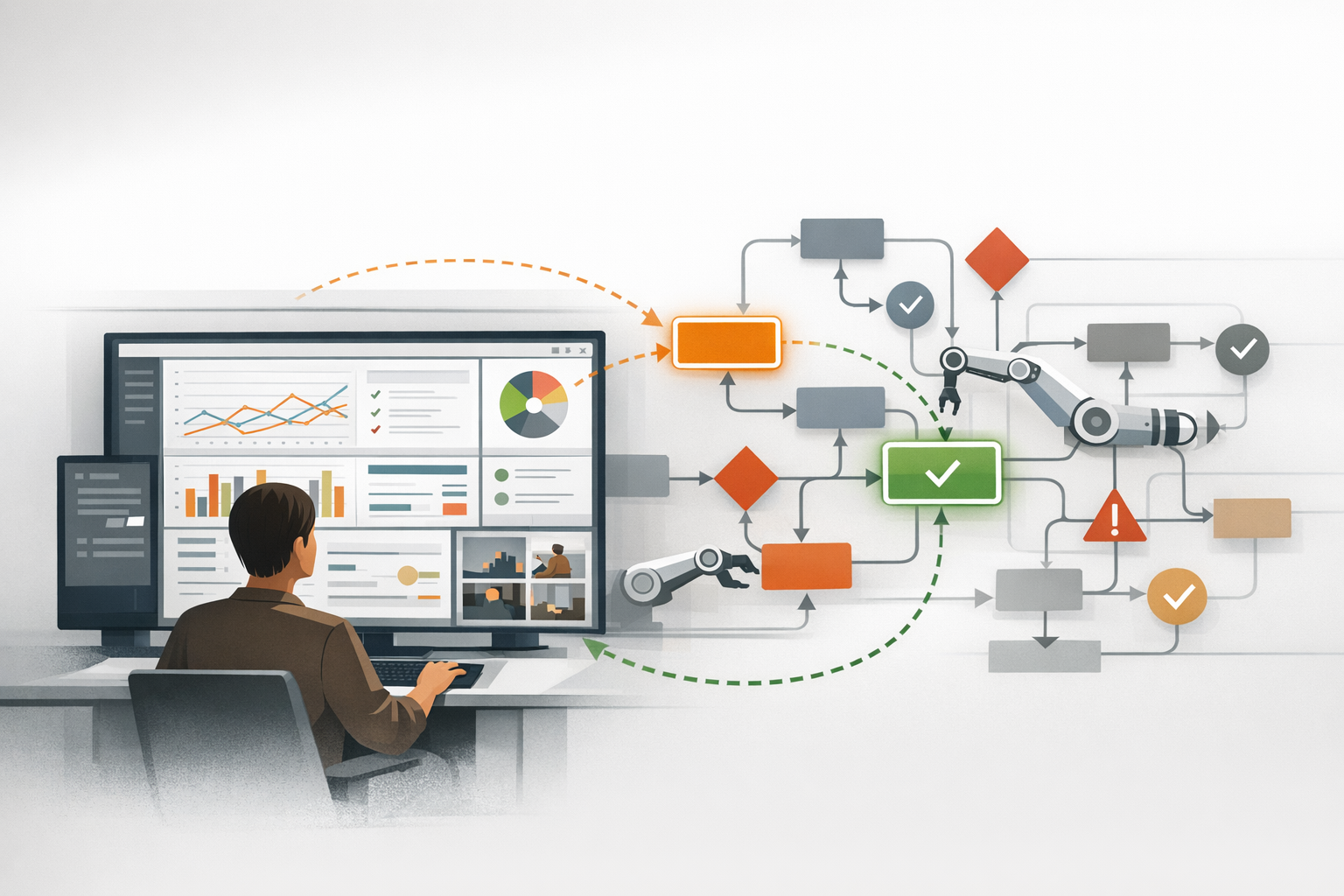
Transparency is a core pillar of the EU AI Act high-risk classification. Systems must be designed so that deployers can understand how the AI reaches its output and can use it appropriately. Furthermore, high-risk systems must be designed for effective human oversight. This means that a natural person must be able to intervene, override, or disable the system if necessary. This requirement often necessitates changes to user interface (UI) and workflow design to ensure that human operators are not merely “rubber-stamping” AI decisions.
Implementing Compliance in Azure and Enterprise Environments
For organizations leveraging Microsoft Azure, achieving compliance involves utilizing tools like Azure AI Foundry and Microsoft Purview to enforce data lineage and model monitoring. Our team at CONAIS focuses on building these governance layers directly into your cloud architecture. Whether you are deploying agentic automation or large-scale document processing, your AI Solutions must include automated logging and bias detection as standard features.
We recommend a phased approach to compliance. Start by mapping all existing AI use cases against Annex III. Next, conduct a gap analysis of your current data governance practices against the requirements of Article 10. Finally, establish a centralized AI registry that tracks the classification and compliance status of every model in production. This structured approach reduces the risk of non-compliance and prepares the organization for future audits.
Why EU AI Act Governance is a Strategic Advantage
While the compliance burden for high-risk systems is significant, it also provides a competitive advantage. Enterprises that prioritize robust governance build greater trust with customers, regulators, and employees. By following a clear Our Services framework, you ensure that your AI-native transition is not just innovative, but resilient and future-proof. Audit-grade governance prevents the costly need to de-provision non-compliant systems later in the production cycle.
The EU AI Act high-risk classification should be viewed as a blueprint for responsible AI rather than just a regulatory hurdle. It encourages better data management, more transparent decision-making, and more reliable software engineering practices. As the Act enters its implementation phases, the window for proactive preparation is narrowing. Organizations that act now to classify their systems and implement the necessary safeguards will be best positioned to lead in the European market.
Partner with CONAIS for AI Compliance and Strategy
Navigating the technicalities of Article 6 and the complexities of Annex III requires both legal understanding and deep technical expertise. CONAIS bridges this gap by providing vendor-agnostic advisory and hands-on implementation. We help you move from legacy IT to modern, AI-native architectures that are fully compliant with the EU AI Act.
If you are currently evaluating your enterprise AI portfolio or planning a new deployment, let us ensure your systems meet the required standards for safety and transparency. Contact our team to discuss your specific use cases and how we can support your journey toward compliant, high-impact AI integration.
Frequently asked questions
What are the criteria for EU AI Act high-risk classification?
AI systems are classified as high-risk if they are safety components of products regulated under Annex I (e.g., medical devices) or if they fall under the specific categories listed in Annex III, such as employment, credit scoring, or critical infrastructure.
Does Article 6(3) allow for exceptions in high-risk classification?
Yes, Article 6(3) provides an exception for systems that do not pose a significant risk of harm, such as those performing narrow procedural tasks or preparatory work, though this must be documented and sometimes notified to authorities.
What happens if an enterprise AI system is classified as high-risk?
High-risk systems must meet strict requirements for risk management, data quality, technical documentation, logging, transparency, and human oversight as outlined in Articles 8 through 15 of the AI Act.